

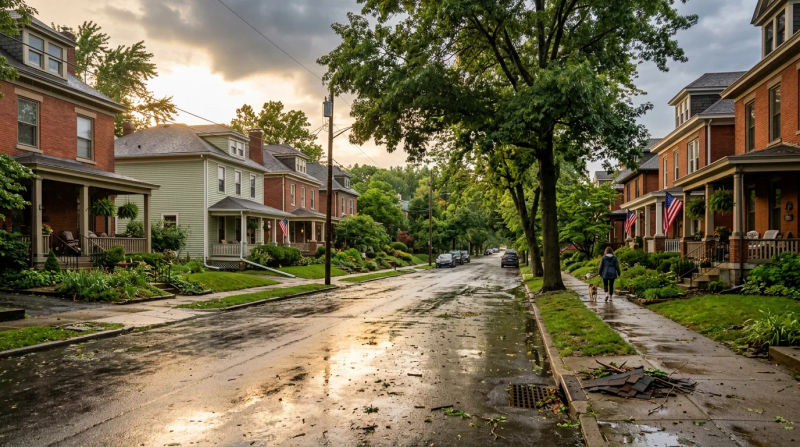
As a handyman here in Cincinnati for over 12 years, I’ve learned that our homes have a unique relationship with our weather. I’m Marcus Delaney, and my work takes me all over the city, from historic brick homes to modern builds. What I’ve seen time and again is that the late-summer storms we get in August aren’t just a passing nuisance - they’re a test for your home’s exterior. The combination of gusting winds and heavy, driving rain can exploit the smallest weaknesses. Taking a little time now for a post-storm check can save you from dealing with significant water damage, rot, or pest infestations when the colder, wetter months of fall and winter arrive. It’s about being proactive, not reactive, and as a local homeowner myself, it’s a practice I believe in strongly.
Cincinnati Weather Challenges
Here in the Queen City, our late-summer weather pattern is predictable in its unpredictability. One minute it's sunny and humid, the next we’re getting a downpour that seems to come from all directions at once. This isn't just a gentle spring shower; it's forceful rain driven by strong winds. At Cincinnati Handyman Eugene, we see this often in Cincinnati - this exact weather pattern is what puts stress on your home's protective shell.
For many newer homes, especially the large, two-story houses built in the 1990s and 2000s in neighborhoods like Monroe, the architecture itself presents unique challenges. These Neo-traditional homes are defined by their complex, multi-gabled rooflines and mixed-material facades of brick, stone, and vinyl. While beautiful, every extra gable, valley, and transition between materials is a potential entry point for wind-driven rain. The constant swelling and shrinking of wood trim in our humid climate, combined with the force of storms, can cause caulk to fail and small gaps to appear. These seemingly minor issues are what my team and I look for, because we know they can lead to bigger problems down the road.
Best Practices for Local Homeowners
A thorough Cincinnati summer storm inspection doesn't have to take all day. The key is knowing what to look for. I recommend grabbing a pair of binoculars and walking the perimeter of your property after a significant storm. Here is a simple storm damage checklist my team and I use to identify the most common issues.
- Roof and Gutters: Look up. Do you see any shingles that are curled, lifted, or missing entirely? Pay special attention to the valleys and flashing around chimneys or vents. On those complex rooflines common in Monroe, debris like leaves and twigs loves to collect in the corners, creating mini-dams that force water under your shingles. Also, check your gutters. If you see water stains on the fascia board behind them or notice they are pulling away from the house, they may be clogged and overflowing during heavy rain.
- Siding, Trim, and Windows: Scan your siding for any pieces that look loose, cracked, or warped. High winds can get underneath vinyl siding and loosen it. Check the trim around your windows and doors. Is the caulk cracked or pulling away? These small gaps are a superhighway for water. This is one of the most frequent small exterior repairs after storm that we handle. A little bit of high-quality exterior caulk now prevents a winter of drafts and potential water damage inside your walls.
- Doors and Entryways: Open and close your exterior doors. Do they stick? Swelling from moisture absorption is a common issue. Check the weatherstripping at the bottom of the door - is it intact? A damaged seal can let in both water and pests.
- Decks, Porches, and Fences: Give your deck railings and fence posts a firm shake. Any wobbling could indicate that the hardware has been loosened or the wood at the base is beginning to rot. Look for any splintered or cracked boards on the deck surface. It’s much easier to replace one or two boards now than an entire section later.
- Exterior Fixtures: Check on your exterior lights, house numbers, and mailbox. Are they still securely fastened to the house? Strong winds can work these fixtures loose over time, compromising the siding or mounting block they are attached to.
Local Resources and References
Living and working in Cincinnati gives you an appreciation for doing things the right way. When you identify an issue, it's important to use the right materials for the repair. Given our varied housing stock, from century-old brick to modern vinyl, a one-size-fits-all approach doesn't work. For example, the specific type of vinyl siding or brick mortar used on your home can often be sourced from local suppliers who understand our regional building trends.
Furthermore, many suburban communities have homeowner associations with specific guidelines on exterior repairs and materials. The team at Cincinnati Handyman Eugene is well-versed in navigating these local nuances. We make it our business to know which materials are appropriate for different home styles and what local standards require. This local knowledge is invaluable for ensuring your repairs are not only effective but also compliant and aesthetically correct for your neighborhood.
Choosing a Local Expert
After a storm, you might see flyers from out-of-town companies. But when it comes to post-storm home repair Cincinnati, nothing beats the accountability and knowledge of a local expert. A local handyman understands the ground you're standing on. We know how the soil here shifts, how the humidity affects different types of wood, and what specific issues to look for in a Hyde Park Tudor versus a Monroe Neo-traditional.
As someone who has built my career on my reputation here in Cincinnati, I stand by my work. My team and I are your neighbors. We’re not going to disappear after the job is done. Cincinnati Handyman Eugene has served Cincinnati homeowners for years, building trust one project at a time. We're focused on providing durable, high-quality repairs that protect your investment in your home. We're not interested in quick, cheap fixes; we're interested in providing real, lasting solutions because our name is on the line right here in our community.
Taking care of your home is a year-round job, but these late-summer checks are especially critical. By catching and addressing small problems now, you’re setting your home up for a safe and dry fall and winter. Don’t let a small gap turn into a major headache. Take a walk around your property, use this checklist, and get a clear picture of your home’s condition.
If you spot anything that concerns you or simply want a professional eye to perform an inspection, my team and I are here to help. When it comes to handyman services in Cincinnati, Cincinnati Handyman Eugene has the local expertise and neighborly trust you need. Feel free to reach out, and we’ll make sure your home is ready for whatever the next season brings.