

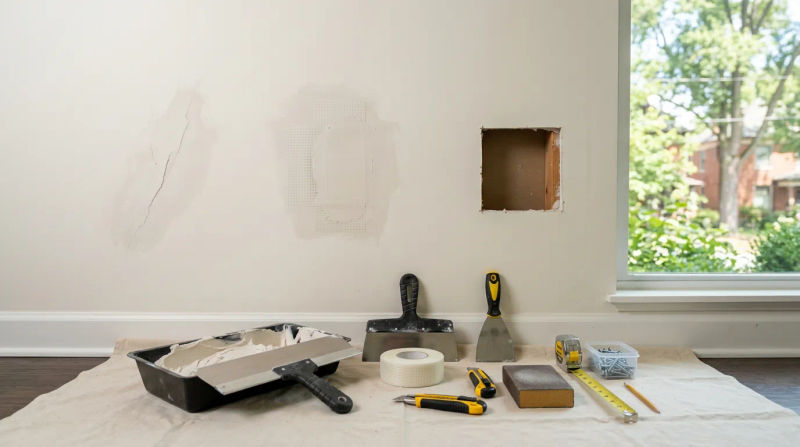
Hi, I’m Marcus Delaney. With over a dozen years working as a handyman here in Cincinnati, I know that when a homeowner calls me about a hole in the wall, their first question is almost always, “How much is this going to cost?” It’s a fair question, and you deserve a straightforward answer. The truth is, the cost can vary quite a bit. My goal here is to pull back the curtain and give you a transparent look at what goes into a drywall repair cost so you can budget wisely and know what to expect.
Especially as we head into late summer, my team and I see a spike in these kinds of calls. August is a busy time in Cincinnati. People are moving, getting kids ready for school, or just trying to get one last project done before the fall. The summer humidity can also make existing issues like nail pops more obvious. Fixing these dings and cracks now is a smart move before you start your fall painting projects and spend more time indoors.
Average Costs in Cincinnati
Let's get right to it. While every job is unique, I can give you some realistic ballpark figures based on the hundreds of drywall jobs I’ve handled across the city. Please remember these are estimates; a formal quote is the only way to get a precise number.
- Small Repairs (e.g., nail pops, screw holes, small dings): $150 - $350
This is the most common type of call. For fixing a handful of nail pops or a few small holes from picture frames, the price is often determined by a handyman's minimum service fee. It might seem high for a tiny spot, but it covers the professional's travel time, setup, the multi-step repair process (even a small patch needs at least two visits for mud to dry), and expertise. The cost to fix nail pops is usually bundled into this minimum charge.
- Medium Repairs (e.g., doorknob holes, fist-sized punctures, long cracks): $250 - $500
This is where we get into more involved patching. A hole from a doorknob smashing into the wall is a classic example. This repair requires cutting a clean square, installing a new piece of drywall or a patch, taping the seams, applying multiple coats of joint compound, and then sanding and texturing. The Cincinnati drywall patch pricing for this kind of work reflects the skill and time needed to make the repair invisible.
- Large Repairs (e.g., multiple large holes, water damage sections): $400 - $800+
A repair falls into this category if you're replacing a significant section of a wall (like a 2'x2' area or larger) or dealing with the aftermath of a leak. Water damage is particularly tricky because we first need to ensure the source of the leak is fixed. Then, we cut out all the damaged, soft drywall and check for mold before replacing the section. This often requires more materials and multiple, lengthy visits to ensure everything is perfect.
- Ceiling Repairs: Add 20-30%
Working overhead is just plain harder. It’s more physically demanding, requires more careful prep to protect your floors and furniture from falling dust and debris, and gravity is not on our side. For these reasons, expect any ceiling repair to cost a bit more than a comparable wall repair.
Factors That Affect Price
The ranges above are a good starting point, but several factors can push a drywall hole repair estimate up or down.
- Texture Matching: Does your wall have that swirly, bumpy, or popcorn texture? Matching it is an art form. A simple, smooth wall is the most straightforward to patch. Replicating a complex texture like knockdown or, especially, popcorn on a ceiling requires special tools and a lot of skill to blend seamlessly. This is often one of the biggest variables in the final cost.
- Location of the Damage: A patch in the middle of a wall is one thing. A repair on a corner, along a ceiling line, or in a tight stairwell is much more complex and time-consuming, which will be reflected in the price.
- Underlying Issues: Sometimes what looks like a simple crack is a sign of a deeper problem. In many of the beautiful pre-1940s homes I work on around Cincinnati, what appears to be drywall is actually plaster and lath. Repairing old plaster is a different skill set and can be more costly than standard drywall work. Similarly, a recurring crack could indicate a settling foundation, which is a much larger conversation.
- Paint and Primer: A standard drywall repair quote typically includes getting the wall patch smooth and textured, ready for paint. It does not usually include priming and painting with the final color. This is often quoted as a separate line item because it requires another visit and different materials. Be sure to clarify this.
How to Get the Best Value
Everyone wants to save money, but with drywall, the cheapest option isn't always the best. A bad patch can look worse than the original hole. Here’s how to get the most for your money.
- Bundle Your Projects: If you have one nail pop, wait a bit. Keep a running “punch list” for your handyman. Having us fix three nail pops, a doorknob hole, and a sticky door all in one visit is far more cost-effective than three separate service calls.
- Clear the Area: You can help reduce labor time by moving furniture away from the wall and clearing a path for us to work. It’s a small thing, but it helps us get right to work.
- Ask for an Itemized Quote: A good contractor will have no problem breaking down the costs for you. This helps you understand where your money is going. Reputable companies can provide itemized quotes so you can choose to patch a section versus replacing a full sheet based on your budget.
Questions to Ask Your Contractor
Before you hire someone, you should feel confident in their ability. Here are a few questions I always encourage homeowners to ask:
- How will you protect my home from dust? Drywall sanding creates a fine, white dust that gets everywhere. A professional will use plastic sheeting, drop cloths, and often a dust-capturing sanding system to keep your home clean.
- Is texture matching and priming included in this estimate? Get clarity on the final level of finish to avoid surprises.
- How many trips do you expect this to take? This helps you understand the timeline. A proper repair almost always requires at least two visits to allow for drying time.
- Are you and your team insured? This is non-negotiable. Only hire contractors who carry liability insurance to protect you and your property.
Fixing drywall is one of those jobs that looks easy on YouTube but is surprisingly difficult to get right. A well-done patch is invisible, while a poor one sticks out forever. Investing in a professional repair ensures the job is done cleanly, efficiently, and looks great for years to come. It restores not just your wall, but your peace of mind.
For a personalized estimate in Cincinnati, contact Cincinnati Handyman Eugene for a free consultation. We’re happy to take a look at your project and give you a clear, no-obligation quote.