

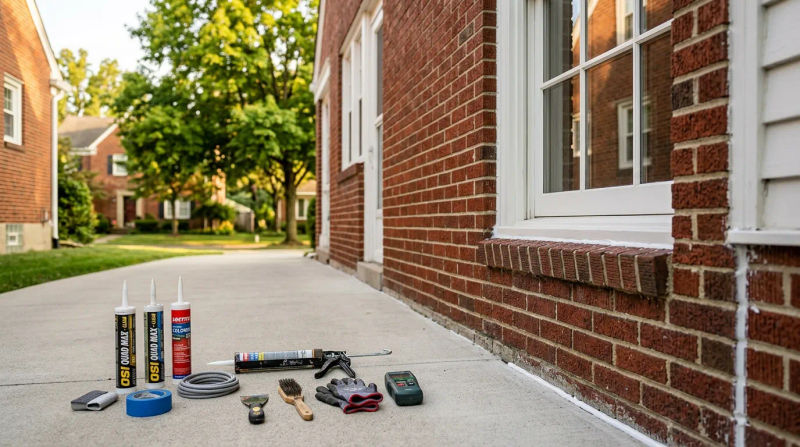
Hello, I’m Marcus Delaney. With over a dozen years working as a handyman here in Cincinnati, I know that when homeowners start thinking about a project, the first question is almost always, "How much is this going to cost?" It's the most practical and important question you can ask, and you deserve a straight answer. My goal today is to pull back the curtain on the costs of exterior caulking and gap sealing, giving you the transparent information you need to budget for this crucial home maintenance task.
Especially here in Cincinnati, with our cold winters and humid summers, sealing up your home's exterior isn't just about looks - it's about preventing drafts, stopping water intrusion, and avoiding much more expensive repairs down the road. As we head into late summer, we're entering the perfect season for this kind of work. The warm, dry days of August and September allow modern sealants to cure perfectly, creating a strong, flexible barrier before the wind-driven rains of fall and the freezing temperatures of winter arrive. Let's break down what you can expect.
Average Costs in Cincinnati
Giving a single price for a caulking job is tough because every home is different. However, based on the hundreds of homes my team and I have worked on across the area, I can provide some realistic ranges. These figures typically include labor and high-quality, commercial-grade sealant.
- Small, Targeted Job: For sealing a single door, a few ground-floor windows, or a couple of utility penetrations, you can expect to invest between $350 and $600. This range often reflects a handyman's half-day minimum rate but ensures the most critical gaps are addressed properly.
- Medium-Sized Project: If you're looking to seal all the windows and doors on one or two sides of a typical one-story ranch or a bi-level home, the cost is usually in the $700 to $1,500 range. This is a popular option for homeowners looking to tackle the side of the house that gets the most weather.
- Full Home - Standard Single Story: The siding gap sealing cost Ohio homeowners face for a complete re-caulk of a standard one-story home (around 1,500-2,000 sq. ft.) generally falls between $1,800 and $3,500. This would cover all windows, doors, corners, and trim boards.
- Large or Historic Home: For larger two-story homes, or especially the gorgeous pre-1940s Victorian homes you see in neighborhoods like Hamilton, costs can start at $4,000 and go up significantly. The intricate trim, complex rooflines, turrets, and sheer height of these properties require extensive ladder work, specialized equipment, and meticulous attention to detail.
These numbers are a starting point. The final exterior caulking cost will depend on the specific factors we'll discuss next.
Factors That Affect Price
The price ranges above are wide for a reason. Several key factors determine where your specific project will land on the spectrum.
- Accessibility and Height: This is the biggest variable. Sealing a ground-floor window is quick and easy. Sealing a third-story dormer window on a steep roofline is a different story. It requires taller ladders, more safety precautions, and sometimes even specialized lifts, all of which add to the labor time and cost.
- Amount of Prep Work: Is the old caulk brittle, cracked, and failing? If so, it has to be completely removed before new sealant can be applied. Cutting, scraping, and cleaning out old caulk is meticulous, time-consuming labor. A job where we can apply new caulk to a clean, prepped joint will always be less expensive than one requiring full removal.
- Linear Feet: At its core, pricing is often calculated by the total linear feet of joints that need to be sealed. A home with many windows, decorative trim, and complex angles will have far more linear feet to seal than a simple, four-cornered house.
- Condition of the Substrate: When we remove old caulk, we sometimes find soft or rotted wood underneath, especially on older homes with wood trim. These areas must be repaired, sanded, and primed before new caulk can be applied. This necessary repair work will add to the final cost.
- Type of Sealant: You can buy a cheap tube of acrylic caulk for a few dollars, but it might fail in a single season. I exclusively use high-performance elastomeric or polyurethane sealants that cost more per tube but are rated to last 15, 20, or even 50 years. The material cost is slightly higher, but it's a wise investment when you consider that labor is the largest part of the overall window trim caulk price Cincinnati homeowners pay.
How to Get the Best Value
Getting the best value isn't about finding the cheapest price; it's about making a smart, long-term investment in your home. Here’s how I advise my clients:
- Bundle Your Projects: If you're having a handyman out anyway, ask for a quote to add caulking to the job. Since we're already on-site, it's more efficient to tackle several items at once, which can save you money on service call fees.
- Prioritize Strategically: If a full-home re-caulk isn't in the budget, focus on the most vulnerable areas. In Cincinnati, this is often the north and west-facing sides of the home, which bear the brunt of winter winds and storms. Also, prioritize areas where you can see visible gaps or feel drafts.
- Don't Skimp on Materials: The labor to apply caulk is the same whether the material is cheap or high-quality. Insist on a top-tier sealant. Paying a little more for a product that lasts 20 years instead of 2 is one of the smartest decisions a homeowner can make.
- Act Sooner, Not Later: Sealing a small gap around a window might cost a few hundred dollars. Ignoring it for a few years until water gets in and rots the window frame and wall sheathing can lead to a repair costing thousands. Preventative maintenance is always cheaper than emergency repair.
Questions to Ask Your Contractor
When you're getting estimates for handyman caulking Cincinnati, you should feel empowered. A good contractor will be happy to answer your questions. Here are the most important ones to ask:
- What specific type of sealant do you plan to use and why? The answer should involve a high-performance product suited to our climate and your home's siding material.
- Does your estimate include the full removal of old, failing caulk? This is critical. You need to know if you're getting a simple 'cap' job or a proper, long-lasting seal.
- Are you fully insured? Ask for proof of liability insurance. Any professional working on your home, especially on ladders, must be insured.
- How will you access the higher areas of my home? This shows they have a plan for working safely and efficiently without damaging your property.
- What is your process for handling any rotted wood you might find? A professional will have a plan for this common scenario and be able to explain how they will address it and what the potential costs might be.
My team at Cincinnati Handyman Eugene has seen firsthand how taking this one preventative step in the late summer can save homeowners from major headaches and expenses when winter arrives. Protecting your home's envelope is one of the most important investments you can make.
For a personalized estimate in Cincinnati, contact Cincinnati Handyman Eugene for a free consultation. We’re here to help you protect your home.