

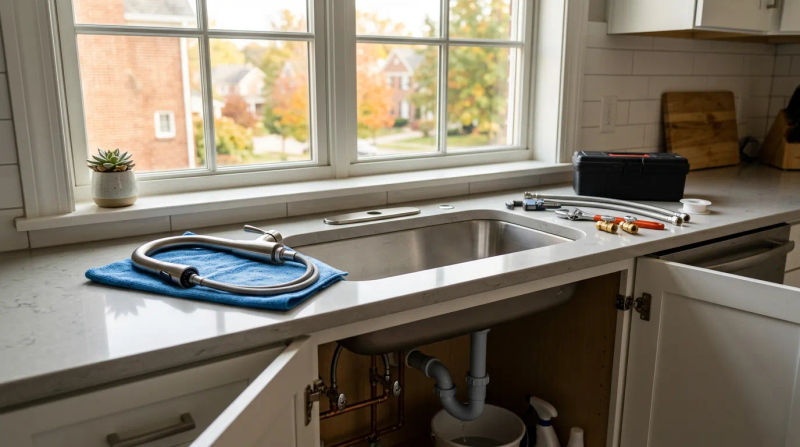
Hi, I’m Marcus Delaney, a handyman here in Cincinnati with over a decade of experience working in homes just like yours. One of the first questions I always get from homeowners is, "How much is this going to cost?" It’s a perfectly reasonable question, and one I believe deserves a straightforward, honest answer. When it comes to a common project like replacing a kitchen or bathroom faucet, the price can vary. My goal here isn't to sell you anything, but to give you a clear, realistic picture of the costs involved so you can budget wisely.
As the temperatures cool down, many folks start thinking about tackling those small indoor projects before holiday guests arrive. A new faucet is a simple upgrade that can make a big difference. With that in mind, let’s break down the real faucet replacement cost you can expect in the Cincinnati area.
Average Costs in Cincinnati
Let’s get right to it. For a standard faucet replacement, where we’re swapping an old faucet for a new one without major modifications, you can generally expect the labor cost to fall within a certain range. Remember, the faucet itself is a separate cost.
Here’s a realistic breakdown based on the jobs my team and I handle every week:
- Bathroom Faucet Replacement: For a typical bathroom sink, the Cincinnati faucet install labor usually runs between $150 and $300. This covers the removal of the old faucet, installation of the new one, connecting the water supply lines, and testing everything to make sure there are no leaks. The bathroom faucet swap price can be on the lower end for a simple, accessible pedestal sink and on the higher end for a faucet in a tight vanity with corroded old fittings.
- Kitchen Faucet Replacement: Kitchen faucets tend to be a bit more complex. Many modern ones have pull-down sprayers, soap dispensers, or even touchless technology. Because of this, labor costs are typically a little higher, ranging from $200 to $400. This also accounts for the often-tighter working space under a deep kitchen sink. The final price depends heavily on the complexity of the unit you choose.
Keep in mind, the cost of the fixture itself is the biggest variable. A basic bathroom faucet might cost $60, while a high-end, touch-activated kitchen faucet could be $500 or more. The kitchen faucet parts cost OH will also include new supply lines, which I always recommend replacing along with the faucet for peace of mind.
Factors That Affect Price
The ranges above are a good starting point, but several factors can shift the price up or down. This is where the unique character of Cincinnati’s housing stock really comes into play.
- The Condition of Your Existing Plumbing: This is the biggest unknown. In many Cincinnati neighborhoods like Highland Heights, we work in a lot of beautiful homes built in the 1950s. These post-war ranch homes are solid, but their plumbing can be over 70 years old. It’s very common to find original shutoff valves under the sink that are either frozen shut or crumble the moment you try to turn them. If a valve needs to be replaced, it requires shutting off water to the whole house and adds time and material costs to the job.
- Accessibility: How easy is it to get to the plumbing? A faucet on a pedestal sink is usually straightforward. However, a faucet tucked behind a deep sink basin inside a narrow cabinet, with a garbage disposal in the way, requires more time, patience, and specialized tools. This extra labor will be reflected in the final cost.
- The Type of Faucet: A simple, single-handle faucet is quicker to install than a widespread faucet that requires three separate holes and careful alignment. A kitchen faucet with a pull-down hose, a counterweight, a control box for touchless features, and a separate soap dispenser will naturally take longer to install correctly than a basic model.
- Necessary Modifications: Are you replacing a three-hole faucet with a single-hole model? You might need a deck plate to cover the extra holes, which is a simple addition. However, going the other way - from a single-hole to a three-hole faucet - could require drilling new holes in your countertop, which is a much more involved task, especially with stone or solid surface counters.
- Unexpected Issues: Sometimes we uncover hidden problems after removing the old faucet, like a small, slow leak that has damaged the cabinet floor or sub-counter. Addressing these issues properly is crucial and can add to the project's scope.
How to Get the Best Value
Nobody wants to pay more than they have to. Here are a few practical tips I give homeowners to help them save money without cutting corners on quality:
- Bundle Your Projects: The most expensive part of any small job is often the travel and setup time. If you have a handyman coming to replace a faucet, think about other small tasks on your to-do list. Do you have a sticky door, a running toilet, or a piece of trim that needs re-fastening? Grouping these small repairs into a single visit is far more cost-effective than scheduling separate appointments.
- Purchase Your Own Fixture: You know your style and budget best. Shopping for your own faucet allows you to find exactly what you want and take advantage of sales. Just be sure to buy a faucet that matches the number of holes in your sink (e.g., single-hole, 4-inch centerset, or 8-inch widespread). If you're unsure, snap a quick picture of your current setup before you go to the store.
- Clear the Workspace: Before I arrive, please clear out everything from under the sink cabinet. Having a clean, empty space to work in allows me to get straight to the job instead of spending the first 15 minutes moving cleaning supplies. It’s a small thing that can genuinely save you money on labor time.
Questions to Ask Your Contractor
When you invite someone into your home to do work, you deserve to feel confident in their ability. Here are a few questions you should ask any handyman or plumber before you hire them for a faucet replacement:
- Are you insured? This is non-negotiable. A professional will carry liability insurance to protect your home in case of an accident.
- Do you charge a flat rate for this job or an hourly rate? Many professionals, myself included, prefer a flat-rate price for standard jobs like this. It gives you a firm, predictable cost. Cincinnati Handyman Eugene can provide a written estimate once we see your sink, valves, and fixture choice.
- What is your plan if a shutoff valve fails? An experienced handyman will have a clear answer. They’ll know to locate the main water shutoff for the house and will have replacement valves on their truck, just in case.
- Does your estimate include all necessary parts, like new supply lines? You want to avoid surprise charges. A good estimate will be comprehensive.
- Do you guarantee your workmanship? A true professional stands behind their work. You should expect a guarantee against leaks or installation errors.
I hope this guide has helped demystify the cost of replacing a faucet in your home. It’s a small project that can refresh the look and function of your kitchen or bathroom, and with a little preparation, you can ensure the process is smooth and affordable.
For a personalized estimate in Cincinnati, contact Cincinnati Handyman Eugene for a free consultation. My team and I are always happy to take a look and give you a firm, no-surprise price for your project.