

It’s a sound many of us in Cincinnati are familiar with, especially as September rolls in: that faint scrape of a door dragging against its frame. All summer long, it closed perfectly, but now that the nights are getting cooler, it suddenly sticks, rubs, or refuses to latch shut. You’re not imagining it. I’m Marcus Delaney, and with over a dozen years working as a handyman in homes across this city, I can tell you this is one of the most common calls my team and I get every single fall.
The shift from our humid summers to the drier, cooler air of autumn causes wood to contract. This small movement is often all it takes to turn a perfectly hung door into a daily annoyance. What seems like a minor issue can lead to damaged floors, warped frames, and frustrating drafts come winter. Let’s walk through how to diagnose what’s really going on with your doors.
Common Signs and Symptoms
Before you can fix the problem, you need to know what to look for. A sagging door rarely happens overnight; it gives off subtle clues long before it becomes a major headache. Here are the most common symptoms I see on the job:
- Uneven Gaps: Open the door slightly and look at the gap between the door and the frame. On a sagging door, the gap will be noticeably wider at the top corner on the hinge side and tighter (or non-existent) at the top corner on the latch side. The opposite is true at the bottom.
- The Telltale Rub: This is the classic sign of a door rubbing on frame Cincinnati homeowners know all too well. The top corner of the door, on the side with the handle, will scrape against the head jamb (the top part of the frame) as you close it. You might see paint worn away in that spot.
- Latch and Strike Plate Misalignment: Does your door refuse to click shut? Look closely at the latch bolt and the strike plate on the door jamb. You’ll likely see that the latch is hitting the plate low, preventing it from entering the hole. This is the primary culprit behind needing an interior door won’t latch fix.
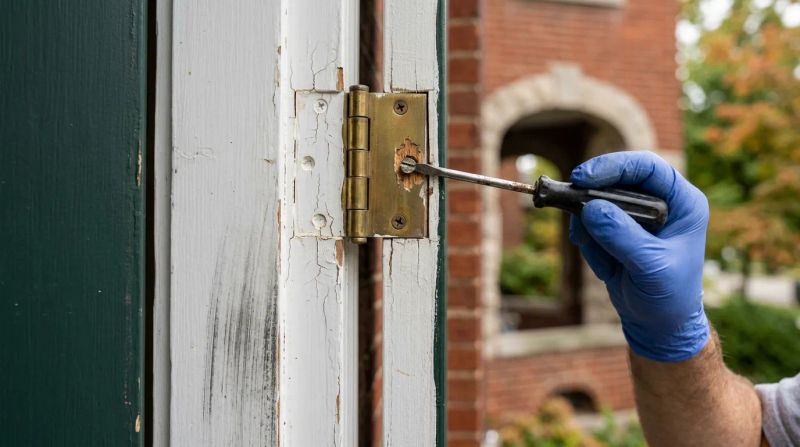
- Visible Hinge Problems: Take a close look at the hinges, especially the top one. Do you see a gap between the hinge leaf and the door or the jamb? Are the screws loose? Sometimes, the screws will look tight but are actually just spinning in stripped wood. This is a dead giveaway of sagging door hinges.
- Floor Damage: Check the flooring directly beneath the door’s swing path. Scuff marks, worn finish, or scratches on your hardwood or tile are clear signs the door is dragging on the floor as it moves.
- The “Bounce” Test: With the door open about a foot, grab the handle and gently try to lift the door up and down. If you feel a lot of play, movement, or a “bouncy” sensation, the hinges are no longer securely holding the door’s weight.
What Causes This Problem
Understanding the root cause is key to finding a lasting solution. While a door can sag for several reasons, a few usual suspects are responsible for the vast majority of cases I encounter.
1. The Power of Humidity and Seasonal Change: Wood is a natural material that breathes. Here in Cincinnati, it absorbs moisture during our humid summers and expands. As the air dries out in the fall, the wood releases that moisture and contracts. This constant cycle of expansion and contraction can cause door frames to shift just enough to create rubbing and latching issues. It also works screws loose over time.
2. The Number One Culprit: Loose & Stripped Hinge Screws: The entire weight of your door is supported by a few small screws. The top hinge bears the most tension. Over years of opening and closing, these screws can work themselves loose. Often, the original screws installed by builders are only about an inch long, just long enough to bite into the soft wood of the door jamb, not the solid wall stud behind it. Eventually, the wood fibers give way, and you’re left needing a stripped hinge screws repair.
3. The Weight of the Door Itself: In many of the beautiful homes built in the 1980s and 1990s, like those you see in neighborhoods like Villa Hills, solid-core or even solid-wood doors were common. These doors are heavy! Over 30 or 40 years, that constant downward and outward force puts immense strain on the top hinge, slowly pulling it away from the frame.
4. Worn-Out Hinges: Hinges don’t last forever. The pins inside can wear down, and the knuckles can become sloppy, creating play and allowing the door to sag. This is more common with frequently used or particularly heavy doors.
5. House Settling: While less common, it’s an important factor to consider, especially in homes that are a few decades old. All houses settle over time. Minor, imperceptible shifts in the foundation can be enough to pull a door frame out of square, causing the door to bind. If you see diagonal cracks in the drywall extending from the corners of the door frame, settling could be the underlying issue.
When to Call a Professional
Some door adjustments are great for a Saturday morning DIY project, while others can quickly become complicated. Knowing the difference can save you time and prevent further damage.
You Can Likely DIY If:
- Screws are just a little loose: If the hinge screws simply need tightening and the wood still feels solid, a screwdriver is all you need.
- You want to try the “long screw trick”: This is a classic handyman fix. Try replacing one of the screws in the top hinge (the one closest to the center of the jamb) with a 3-inch construction screw. This long screw will bypass the jamb and anchor directly into the wall stud behind it, pulling the entire jamb and door back into alignment. This often solves minor sagging instantly.
It’s Time to Call an Experienced Professional When:
- The screws are stripped: If you tighten a screw and it just spins in place, the wood is stripped. A professional has the right techniques for a proper stripped hinge screws repair, which might involve using hardwood dowels and wood glue to create a solid new anchor point. Simply using a bigger screw can sometimes split the wood and make the problem worse.
- The long screw trick doesn’t work: If a 3-inch screw doesn't solve the problem, the issue may be more complex, such as a severely warped door or a frame that is significantly out of square.
- The door frame itself is the problem: If you use a level and find that the door jambs are not plumb (vertically level), adjusting the hinges won't be enough. This requires more advanced carpentry skills to correct.
- You suspect the house is settling: If you see those associated drywall cracks, it's wise to have a professional assess the situation. They can determine if it's a simple door adjustment or a sign of a larger structural issue.
- It's a heavy exterior door: These doors are not only heavy and difficult to handle, but they are also your first line of defense against the elements and intruders. A poorly sealed exterior door can lead to major drafts and security vulnerabilities. An experienced handyman can ensure it's hung, sealed, and secured perfectly.
An issue that seems like a simple interior door won’t latch fix can sometimes be a symptom of a bigger problem. A qualified professional can quickly diagnose the true cause and implement a permanent solution.
Conclusion
That scraping sound your door makes isn't just an annoyance; it's a signal that something is out of alignment. Whether it's due to Cincinnati's seasonal humidity shifts, the simple physics of a heavy door pulling on its hinges, or stripped screws, the problem will likely worsen over time. Addressing it now, in the fall, prevents further damage to your door, frame, and floors, and ensures everything is sealed up tight before winter arrives.
Start by checking your hinges and gaps. Try the simple fixes first, but don't hesitate to bring in an expert if the problem is beyond a quick tightening. A well-hung door is one of those small details that makes a home feel solid and well-cared-for.
If you notice any of these signs, contact a local Handyman professional for an inspection.